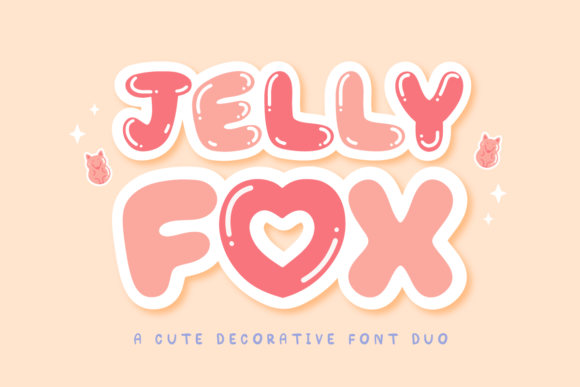
Jelly Fox: A Playful Typeface for Creative Projects
As a designer who regularly evaluates typefaces for real-world applications, I always look for fonts that bring something unique to the table—both in personality and performance. Jelly Fox, a decorative font with a distinct visual character, caught my attention not just for its whimsy but also for how it might fit into specific creative scenarios. Here's my take after testing it across a range of design tasks.
First Impressions: Sweet and Sassy
Jelly Fox is immediately recognizable as a playful, hand-drawn typeface. The letters have soft curves, rounded edges, and a slightly irregular rhythm that gives them a sense of spontaneity and charm. It feels like a mix between a child’s doodle and a well-crafted display font, which makes it stand out from more rigid or traditional options.
The mood it creates is lighthearted, friendly, and approachable. There's a kind of sweetness to the forms, but also an edge that keeps it from feeling too cutesy. This balance makes Jelly Fox appealing for projects where you want to convey warmth without losing credibility. Its visual personality leans toward the quirky side, so it naturally belongs in contexts where creativity and fun are key.
Where It Shines
- Logo Design: Jelly Fox can be a great choice for logos targeting younger audiences or those looking to inject personality into their brand mark. Its uniqueness helps create immediate recognition.
- Brand Identity: While not ideal for full text use, it works well as a headline or accent font in a multi-type system. Pairing it with a clean sans serif or minimalist script can help maintain professionalism while adding flair.
- Packaging Design: The font adds a tactile, almost handmade feel to product labels and packaging. Especially effective on items like candies, toys, or novelty products where visual delight matters.
- Product Labels: Short phrases and names benefit from Jelly Fox’s expressive style. Just make sure the background doesn’t clash with the letterforms, which can get busy if not handled carefully.
- Posters & Invitations: As a display font, Jelly Fox brings energy to event invitations, posters, and promotional materials. It's especially good for themed events or pop-up shops with a youthful vibe.
- Miscellaneous Merchandise: T-shirts, stickers, and mugs often need a font that stands out. Jelly Fox delivers just that with its eye-catching curves and texture.
- Website Headers: Use it sparingly in web design. It can serve as a hero headline or title for blog posts where you want to break away from the norm and capture attention quickly.
- Blog Graphics & Social Media: For social media posts, quotes, or blog headers, Jelly Fox adds a touch of originality. It fits well in content niches like lifestyle, food, or craft-based blogs.
- Digital Ads: In short-form digital ads, Jelly Fox can be used effectively to highlight key phrases or slogans. Its bold presence ensures your message is noticed.
- Printable Products: From printable cards to DIY kits, this font has a nostalgic yet modern feel that resonates with crafters and digital sellers alike.
- Canva Templates & Cricut Projects: Jelly Fox plays nicely with design tools like Canva and Cricut. Its legible structure at larger sizes makes it suitable for layered designs and cut vinyl work.
- Commercial Design Assets: If you're selling templates or branded assets online, Jelly Fox offers a fresh aesthetic that sets your work apart from generic stock fonts.
Use It Carefully
While Jelly Fox has many strengths, there are areas where it needs careful handling. First, avoid using it for large blocks of text. Its decorative nature means it sacrifices some clarity and rhythm, making it unsuitable for body copy or long headlines.
- Large Headlines: At bigger sizes, the font looks stunning. But ensure it’s balanced with enough white space to let each character breathe.
- Short Phrases: That said, it excels when used for taglines, call-to-action buttons, or other short impactful messages.
- Quotes & Brand Marks: These are perfect spots for Jelly Fox to shine. However, consider the tone of the quote or brand—it should align with the font’s playful essence.
- Premium Packaging: If your project is aiming for a luxury or premium feel, Jelly Fox may fall short unless paired with more refined elements.
- Social Posts: Great for Instagram or Pinterest, but less so for LinkedIn or professional newsletters unless intentionally used as a contrast.
- Supporting Text: Never use it as a secondary or supporting font. Always keep it front and center as a decorative accent.
Readability and Design Impact
Readability in Jelly Fox is moderate. While it's clear at larger sizes, the slight inconsistencies in stroke weight and spacing can cause issues in smaller formats. I recommend testing it at different scales before finalizing any layout. You’ll likely find that it performs best above 24pt, especially in print and digital headers.
In terms of hierarchy, Jelly Fox is excellent for creating contrast in a design. When paired with a more neutral typeface like a sans serif or even a simple serif, it can anchor the visual story and draw attention to important elements. But overuse risks disrupting the flow and diluting the brand’s message.
Brand consistency is another area to watch. Because of its strong visual identity, Jelly Fox can become a signature element in your brand toolkit—but only if it's used consistently and thoughtfully. Too many variations or too much reliance on it can lead to a cluttered look, especially if you're working across multiple platforms.
Audience trust and recognition are tied to how well the font communicates your brand’s values. If you’re targeting kids or families, it could be a perfect match. But for corporate clients or formal communications, it might come off as unprofessional or overly casual.
Practical Designer Notes
If you're considering Jelly Fox for client work or personal branding, here are some tips to keep in mind:
- Test it in black and white: The subtle gradients and textures in Jelly Fox may not translate well to grayscale, especially in print. Make sure the contrast remains clear and the character shapes still pop.
- Check small-size readability: Some letters, particularly "a", "g", and "e", lose clarity when scaled down. Avoid using it in anything under 18pt unless you’re okay with potential legibility trade-offs.
- Try it on real mockups: See how it looks on actual materials like t-shirts, signage, or packaging. Sometimes a font behaves differently in context than on screen.
- Compare uppercase and lowercase: Jelly Fox’s lowercase characters have more character variation, which can be charming but also inconsistent. Uppercase is more uniform and easier to manage in logos or headlines.
- Review spacing: The spacing is generous, which is good for display settings but may require adjustment when pairing with tighter-kerned fonts.
- Test beside other styles: Try it next to a serif font (like Lora), a sans serif (such as Montserrat), a script font (maybe Alex Brush), a handwritten option (like Dancing Script), or a bold display font (perhaps Bebas Neue). You'll find it pairs well with minimalists but clashes with overly ornate scripts.
- Confirm commercial licensing: Before using Jelly Fox in any client-facing or revenue-generating project, double-check the font license. Some decorative fonts have restrictions that could limit their use in branding or merchandise.
Design Mood and Engagement
Jelly Fox contributes significantly to the visual mood of a project. It’s inherently joyful and can evoke feelings of nostalgia, playfulness, and creativity. In editorial design, for instance, it can frame a story or section in a way that invites curiosity and engagement.
That said, engagement depends heavily on context. If your audience is expecting a serious tone and you drop in a line of Jelly Fox, it might confuse rather than connect. Use it to reflect the brand voice accurately—whether that's cute, quirky, or cool.
Final Thoughts for Designers
Jelly Fox isn't a one-size-fits-all solution. It’s a premium font with a niche appeal, and it thrives in environments where decoration and expression are valued over strict typographic rules. Whether you're crafting a logo, designing a poster, or creating social media graphics, it can add a memorable twist when applied correctly.
But remember, the goal of typography is to support the message—not overshadow it. Jelly Fox does best when it’s part of a considered typographic strategy, used in limited quantities and paired with complementary styles. It’s not every day that a decorative font manages to walk the line between fun and functional, but Jelly Fox comes close.
For designers, marketers, and brand owners who want to elevate their visuals with a creative font, Jelly Fox is worth exploring. Just be sure to test it thoroughly and apply it with purpose.